



Pierre Neuville, Shakespeare & The Art Looking Harmless
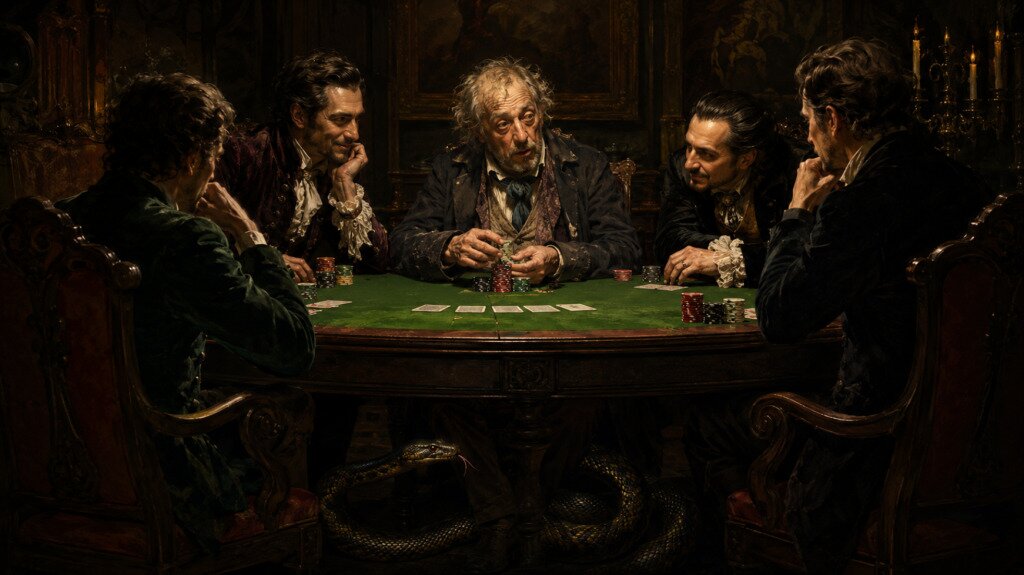
Your face, my thane, is as a book where men
May read strange matters. To beguile the time,
Look like the time; bear welcome in your eye,
Your hand, your tongue: look like th’ innocent flower,
But be the serpent under’t.”
~ Lady Macbeth
The Serpent
There is a type of poker player who doesn’t look dangerous at all. He fumbles with his chips, bets awkwardly, looks perpetually confused and sometimes shows down something ridiculous. Nobody at the table gives him any credit and the vultures start to circle. I encountered one such player at the Pokerstars UKIPT London in 2012.
Without wishing to be ageist, he was an older gentleman. He wore a formal shirt but his general appearance was somewhat unkempt. His hair hadn’t seen a comb in quite a while sort of thing. When the action was on him, he looked utterly bewildered. Sometimes he would fold and sometimes he would fiddle with his chips for twenty seconds before folding. Occasionally, he would count out some chips incredibly slowly one at a time, eventually carving out a monstrously large raise, then put those chips back into his stack, announce an illegal bet-size, have that declaration clarified by the dealer and then finally put out too much and be rebated by the dealer. Suffice to say, this put a target on his back as the pros jostled to isolate him in pots.
At the first break, I met my friend Dara and he asked me how my table was. I told him it was pretty tough, apart from this one guy who looked like an extra from One Flew Over Cuckoo’s Nest. He laughed and asked me to point to the person. I discreetly gestured toward my befuddled table-mate who was standing on his own in the corner of the room with a blank expression and furrowed brow. “That’s Pierre Neuville”, exclaimed Dara. “Nah, no way”, I replied.
Neuville was a 2-time European Poker Tour runner-up and multi-tabling online player, famous for being a satellite specialist and serial qualifier for all the big live events. “That’s definitely him”, insisted Dara. Having lived in the US for the previous 4 years, I was new to the European scene but this just didn’t compute. I pulled out my phone, did some Hendon-Mobbing and up popped a photograph of the then 69-year old Belgian live and online crusher Pierre Neuville. Sure enough, it was him.
Fully Commit To The Deception
Macbeth wasn’t much of a bluffer and his wife knew it. His appearance revealed his thoughts. His emotions could be read like a book. He was not good at disguising his true intentions. This is why she felt it necessary to deliver one of the most famous pep-talks in all of literature. In order to be King, he needed to murder his King and in order to do that without being caught, he needed to “bear welcome in [his] eye, [his] hand, [his] tongue’. In other words, he needed to commit fully to the deception.
Two other Shakespearean protagonists built elaborate false personas to disguise their real intentions. Hamlet pretended to be mad while Richard III presented himself as humble, reluctant and almost unwilling to accept the crown. On the surface, these looked like different deceptions. One man appeared insane while secretly investigating a murder. The other appeared reluctant to seize power while secretly murdering practically anyone who stood between him and the throne. However, underneath, they essentially played the same game: make yourself difficult to trust, difficult to read and, above all, easy to underestimate.
When you analyse it, this is actually a more sophisticated strategy than simply bluffing. A conventional bluff says, “I have a stronger hand than I really do”. Hamlet and Richard did something much more ambitious. They sold an image. They said “You shouldn’t take my behaviour seriously.” They deliberately damaged their own credibility because they understood that if their opponents thought they were irrational, reluctant or weak, they would not develop a coherent strategy to combat them.
Richard III: The Player Who Didn’t Want the Pot
Richard’s deceptive image was almost comically transparent to the audience. “I am determined to prove a villain,” he announced, effectively turning his hand face up to us. We know that he wanted the throne. We know that he was prepared to deceive, manipulate and murder to get it. Yet the people around him repeatedly responded to the version of him that he chose to present. He was not pretending to be a good man, but rather that he was reluctant.
Richard repeatedly constructed the impression that power is something being imposed upon him rather than something that he desperately wanted. When the crown came within his grasp, he performed modesty, piety and reluctance while secretly arranging his next move. He understood that ambition itself can be a tell, so he concealed his ambition behind humility.
The poker analogy of obvious. He is a player who doesn’t seem particularly interested in the pot but is actually inducing a bet from his opponent. If you appear competitive, your opponents put up their guards, focus, devise counter-strategies and execute with a greater degree of sharpness. If you appear indifferent to winning, they relax. Richard didn’t merely hide the strength of his hand; he made everybody believe that he didn’t care whether the hand was won at all. He understood that players don’t feel the need to defend themselves against someone they don’t perceive as a threat.
Hamlet: The Player Who Went Crazy
Hamlet’s deception worked a little differently. While Richard made himself appear too harmless to be dangerous, Hamlet made himself appear too irrational to be taken seriously. When Hamlet decided to “put an antic disposition on,” he was not simply pretending to have lost his mind. He was deliberately creating a reputation in which his actions became difficult to interpret. He made himself an unreliable source of information and he assured that his decisions would be underestimated.
Hamlet realised that by behaving strangely, people would blame the madness. Anything he said would be regarded as the ramblings of a disturbed prince. The result was that he could move around the court without his actions carrying the weight that they should have carried. This apparent mental weakness was, of course, a form of camouflage.
Again consider the poker parallel. He is the player who spends an hour opening too many hands, showing ridiculous bluffs and making strange comments at the table. Eventually, the other players stop asking what his actions mean. They simply conclude that he is a maniac. His opponents are still paying attention to him but they have been trained to discount what they see.
The Art of Being Underestimated
Both Richard and Hamlet are deliberately lowering their perceived threat level. In poker, this is the essence of ‘setting up an image’. Whether it is with their appearance and attire, their behaviour or their play, the point is to subvert reality and lay the trap for a future payoff. A bad hand shown down previously is an investment. A ridiculous raise is advertising. Some peculiar body language sells the fishy narrative. Then, when the premium hand finally arrives, the table interprets the action through the lens of what has already been established.
One of the great pleasures of poker is watching somebody confidently make a read that is completely wrong. They might even verbalise it, saying, “He’s never bluffing here”, “She always has it,” or perhaps most profitably, “He’s a complete idiot”. The level of certainty can be off the charts in spots where uncertainty exists. There is a crucial poker distinction here. A good bluff makes you believe the wrong thing. A great table image makes you believe that you understand the bluffer.
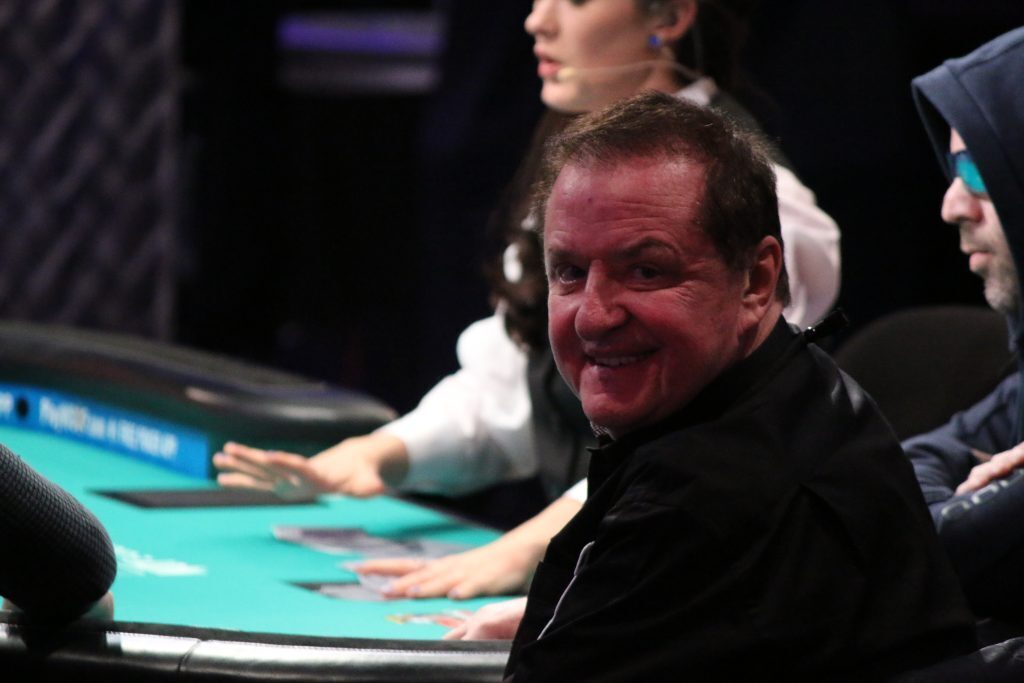
Richard wanted everyone to underestimate his ambition. Hamlet wanted everyone to underestimate his rationality. Pierre Neuville wanted the people at his starting table at the 2012 UKIPT London to do both. I console myself with the fact that I was neither the first nor the last to think him the innocent flower. Three years later, he came 7th in the WSOP Main Event, when once again, with a performance worthy of the Bard, he gave a masterclass in the art of looking harmless.





Comments