


Justin Vaysman Wins Poker Masters Event #6 After Quarter-Big-Blind Comeback
By Sandra Gaweda | October 20, 2026 | 4 min read Justin Vaysman of Horsham, Pennsylvania, has won Event #6


New Jersey Sets New Responsible Gaming Rules for Online Poker
By Sandra Gaweda | October 21, 2026 | 5 min read
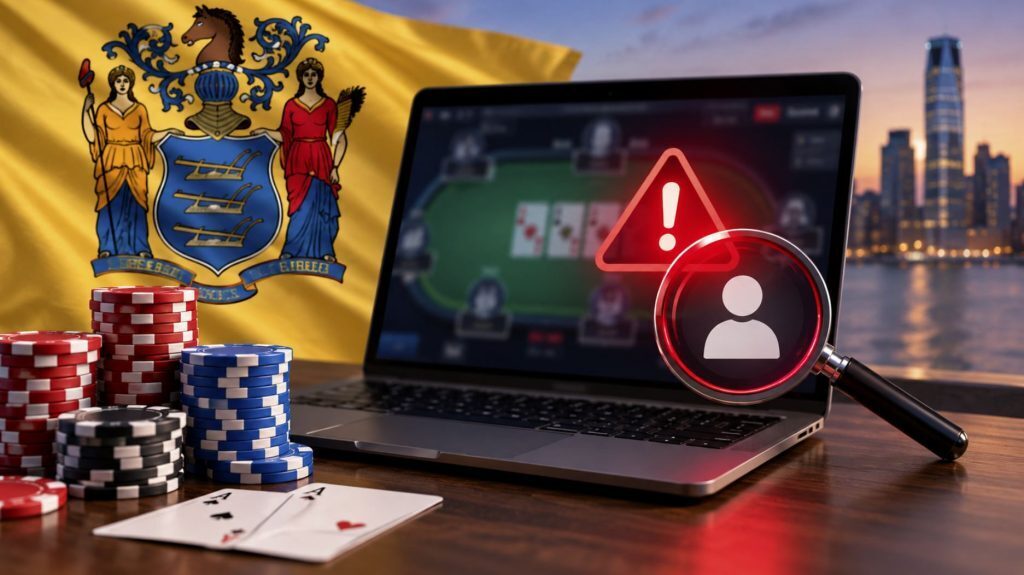
New Jersey has become the first state to make data-driven responsible gaming rules legally enforceable, including for online poker players. Attorney General Jennifer Davenport and the Division of Gaming Enforcement (DGE) announced the new rules on October 20.
Licensed online poker sites and casinos must now watch for signs of problem gambling, review flagged accounts and take action when needed. The rules include up to three steps to help at-risk players.
New Jersey operators already had responsible gaming staff and policies, but no single set of enforceable rules existed. The state also raised concerns about reports of aggressive marketing aimed at people showing signs of problem gambling.
Under the new rules, each operator must appoint a responsible gaming lead, track player activity and review accounts that meet certain triggers. Operators must also keep a list of players they identify as at risk.
The rules cover licensed online casinos, poker rooms and mobile sportsbooks, but not land-based casinos. While poker isn’t named in the rules, licensed online poker sites must follow them. These include Borgata/BetMGM, Caesars/WSOP and Resorts/PokerStars, as listed in our New Jersey online poker guide.
The adopted rule text lists 10 behaviors that can trigger an account review:
A trigger doesn’t automatically mean a player has a gambling problem. Operators must review the account before taking further action. They can also add their own triggers or set lower limits, while the DGE can update the rules later.
Picture a regular player depositing money for a big online tournament series. A deposit over $10,000 in one day triggers an account review. The operator then decides whether further action is needed.
Grinders should also watch how much time they spend playing. Extra hours during a tournament series could trigger a review if login time rises by at least 50%. Ending two sessions in one week with less than $1 in the account can also raise a flag.
Withdrawals are affected too. Players can’t cancel or reverse a withdrawal within three days of requesting it, before the funds are paid out. Operators also can’t encourage players to reverse pending withdrawals. Our guide to online poker payment limits explains how deposit and withdrawal caps already work.
If a review places you on the at-risk list, the operator can take up to three steps:
During Phase 3, if the operator can’t reach you after three attempts at least 24 hours apart, it must suspend your account until contact is made and you’re no longer considered at risk. If you’re still at risk after Phase 3, the operator must close your account and refer you for support.
Players in Phases 2 and 3 also stop receiving direct ads, promotions, event invitations and comps.
Cool-offs now last at least 72 hours and can’t be reversed once they start. Operators must keep records for five years. Players may be removed from the at-risk list if they go 180 days without another trigger after their last account review, and the operator finds no further risk.
Players who need a longer break can use New Jersey’s iGaming self-exclusion program. The state also offers the free RecoverMe app, which uses cognitive behavioral therapy (CBT) tools to help people with gambling problems. New Jersey residents can use the code NJ100. The DGE also offers free financial counseling through GamFin.
New Jersey’s rules could influence how other states handle responsible gaming. New York regulators voted on October 9 to propose similar responsible gaming rules for mobile sportsbooks, but haven’t set a date for a final vote.
For now, New Jersey is setting a new standard for how licensed online operators spot and respond to signs of problem gambling.
The new rules focus on large deposits and sudden changes in player activity, such as depositing more than $10,000 in one day or canceling three withdrawals in 10 days. High-volume players and tournament grinders may be more likely to trigger a review.
Players should also know about the three-day withdrawal restriction and minimum 72-hour cool-off period. They can check their operator’s terms and review our responsible gambling resources.
By Sandra Gaweda | October 20, 2026 | 4 min read Justin Vaysman of Horsham, Pennsylvania, has won Event #6

Key Details Spain’s Adrian Mateos won 2026 Poker Masters Event #5, a $10,500 No-Limit Hold’em tournament, for $229,500 on Saturday,

Key Details New Yorker Nicholas “Nicky P” Palma won 2026 Poker Masters Event #2: $10,500 No-Limit Hold’em on Wednesday, October




Comments