




Online Poker Gambling Bills

Following Black Friday in April 2011, lawmakers introduced a number of federal and state proposals to regulate online poker. While federal legalization efforts stalled, several states went on to legalize and regulate online poker or broader internet gaming.
Not that we blame anyone for trying. Legalizing poker online would be beneficial in numerous ways, such as:
- Revenue: Legal gambling would generate billions in revenue for both the nation and individual states. Supporters of regulated online poker have historically argued that licensing fees and gaming taxes could generate additional state revenue.
- Protection: The US government would protect players from unregulated operators that the government cannot pursue. The government would hold companies operating from the states accountable and punish them severely if they operate without a license or treat players unfairly.
- Jobs: New companies would mean job creation and growth.
- Peace of Mind: Federal regulation could provide players with greater legal clarity and consumer protections when playing online poker for real money.
There is no shortage of reasons as to why online poker (or gambling) should be legal in the United States. Freedom is another one.
Why Isn’t Online Poker Legal?
Since the 2011 DOJ opinion held that the Wire Act applies only to sports betting, several states have legalized and regulated online poker and casino gaming. Unfortunately, this has kept members of Congress from trying to do the same on a federal level. As more states legalize internet poker, interstate agreements can allow participating jurisdictions to combine player pools where permitted by law.
With this in mind, let’s take a look at some of the gambling bills that have passed and failed, both on the federal and state level.
Online Poker / Gambling Bills & Acts
The federal proposals below are historical efforts to regulate online poker and are no longer active legislation.
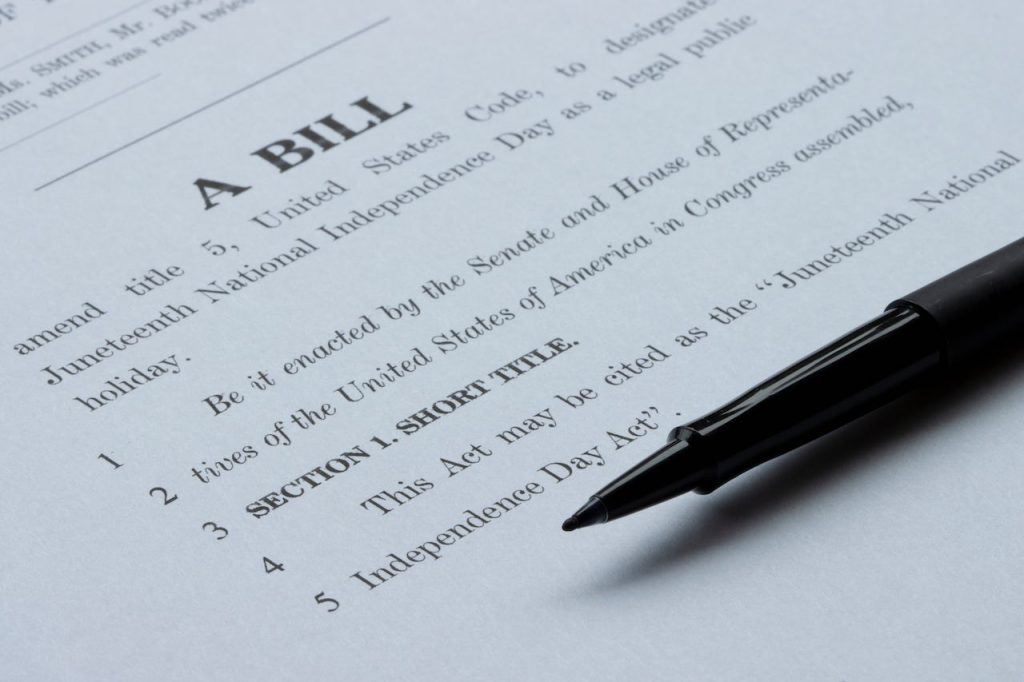
Michigan HB.4311 incorporated into Act 152
Rep. Brandt Iden proposed the original Lawful Internet Gaming Act earlier in 2019 for the people of Michigan, but the final version that became law was vastly different. However, they needed to make concessions to pass the bill, and it did pass at the very end of the year. The details are on the Michigan state page.
West Virginia HB.2934 incorporated into Chapter 29
This was a fairly standard online poker and casino games bill passed in early 2019. Little debate or change was required, as it was clearly written and garnered enough support for passage. For more information, visit the West Virginia state page.
Pennsylvania HB.271 incorporated into Title 4
The House bill was the one that went down to the wire in Pennsylvania, pushing both houses of the state legislature to make some concessions to pass this significant gambling expansion bill for Pennsylvania. It passed in October 2017, and Governor Tom Wolf signed it into law days later. Visit the PA state page for more info.
Pennsylvania HB 1235 (2013 Proposal)
Pennsylvania lawmakers considered HB 1235 in 2013 as an early proposal to authorize internet gaming, but the bill did not become law.
House Bill 1235 proposed several provisions that would have affected online gambling operators and players. The bill primarily favored established brick-and-mortar casinos that already held slot machine licenses when determining eligibility for online gambling licenses. Applicants would also have been subject to licensing and suitability requirements.
The proposal did not include a “bad actor” provision that would automatically exclude operators based on their previous participation in the US online gambling market. The Pennsylvania Gaming Control Board would have been responsible for regulating internet gaming under the proposal.
Delaware HB.333 incorporated into Chapter 285
The Delaware Gaming Competitiveness Act of 2012 is now a part of the state law, having put internet gaming under the supervision of the Delaware Lottery. The law essentially expanded the lottery’s offerings to allow racinos to benefit from expanded online gambling options. The Delaware state page provides more detail.
H.R. 2366
Also known as the Internet Gambling Prohibition, Poker Consumer Protection and Strengthening UIGEA Act of 2011. Texas Rep. Joe Barton introduced this bill on June 24, 2011. The bill did not advance out of Congress and expired at the end of the 112th Congress. Barton introduced another federal online poker proposal in 2013.
Internet Poker Freedom Act of 2013
Texas Rep. Joe Barton introduced the Internet Poker Freedom Act of 2013 as an effort to establish a federal licensing framework for online poker. The bill would have required operators to obtain a license before offering online games and included a temporary bad actors clause. The proposal did not become law.
Internet Skill Game Licensing and Control Act of 2008
Senator Robert Menendez introduced S. 3616, better known as the Internet Skill Game Licensing and Control Act of 2008, on September 26, 2008. The bill did not advance before the 110th Congress ended in January 2009.
The objective of the bill was to provide licensing of internet skill game facilities or web sites, with the primary focus being poker. However, their definition of skill also encompassed any game that predominantly relies on the skill of the players, including poker, bridge, and mahjong, and utilizes simulated cards, dice, or tiles.
The Poker Players Alliance supported S. 3616 and praised its proposed licensing and regulatory framework for online poker.
Pechanga Poker Bill: Internet Poker Consumer Protection Act of 2013
The Internet Poker Consumer Protection Act of 2013 was a California proposal aimed at legalizing and regulating online poker. The proposal received support from several tribal gaming interests, including the Pechanga Band of Luiseño Indians.
The proposal faced disagreements over interstate player pooling, operator eligibility, tribal gaming interests, and other regulatory issues. California ultimately did not enact the proposal, and the state has not legalized regulated real-money online poker.
Internet Wagering Citizens Protection Act (Model Proposal)
Part-time poker pro Martin Shapiro drafted the Internet Wagering Citizens Protection Act as a model proposal rather than formally introduced federal legislation. Shapiro combined elements of existing online gambling proposals and incorporated feedback from poker players. He intended the proposal to serve as a framework lawmakers could use when considering federal online gambling legislation.
New Jersey A.2578 incorporated into Title 5
New Jersey enacted A.2578 in February 2013, authorizing licensed Atlantic City casinos to offer regulated internet gaming. Online casino gaming and poker launched in the state in November 2013. The NJ state page contains more information.
The Internet Gambling Regulation, Enforcement and Consumer Protection Act of 2013
Rep. Peter King introduced H.R. 2282, the Internet Gambling Regulation, Enforcement, and Consumer Protection Act of 2013, on June 6, 2013. The bill proposed a federal framework for licensing and regulating online gambling, with provisions addressing underage gambling, criminal activity, problem gambling, and consumer protections. The proposal did not become law.
The bill also included provisions addressing gambling parlors and internet cafes, cheating and collusion, and participation by self-excluded players.
What Does It Take For a Bill to Pass?
A bill can take several years to turn into law. Here is an outline of the process: [1]
- A member of Congress introduces a bill in the House or Senate.
- The bill is referred to one or more committees for review.
- A committee may hold hearings, amend the bill, and vote on whether to advance it.
- If approved, the bill can move to the full chamber for debate and a vote.
- The other chamber must also consider and approve the legislation.
- The House and Senate must agree on identical bill text before sending it to the president.
- The president may sign the bill into law or veto it.
- Congress can override a presidential veto with a two-thirds vote in both chambers.
Once enacted, a bill becomes law and may be referred to as an Act. Most bills introduced in Congress do not ultimately become law.
This information is specific to the federal government and may apply to some states. However, state processes may vary depending upon the format of each state legislature, necessary votes, and governor approval requirements.
How Long From the Bill Passing to a Live Poker Site?
This is impossible to say at the federal level because it has yet to be done.
On the state level, though, it depends on the state. For example, Nevada launched its first online poker site within one year of legalizing online poker. New Jersey and Delaware launched sites fairly quickly as well. Pennsylvania, however, took nearly two years to launch its first online casino sites and more than two years for the first online poker site.
Launch timelines vary significantly by state because regulators must write rules, review license applications, test gaming systems, and approve operators before online poker can go live.