

Poker’s Most Shocking Court Cases
Poker has always had an oddly magnetic relationship with the law. Over the years, the game has flouted rules, flirted

Poker’s Most Shocking Court Cases
Poker has always had an oddly magnetic relationship with the law. Over the years, the game has flouted rules, flirted with danger and even been complicit in murder, as legal parameters and the boundaries of the poker table have clashed in controversial style. From murder to money laundering, edge-sorting to Postlegate, we’ve rounded up five of the most unusual suspects as poker’s most infamous court cases take to the stand over the last 150 years.
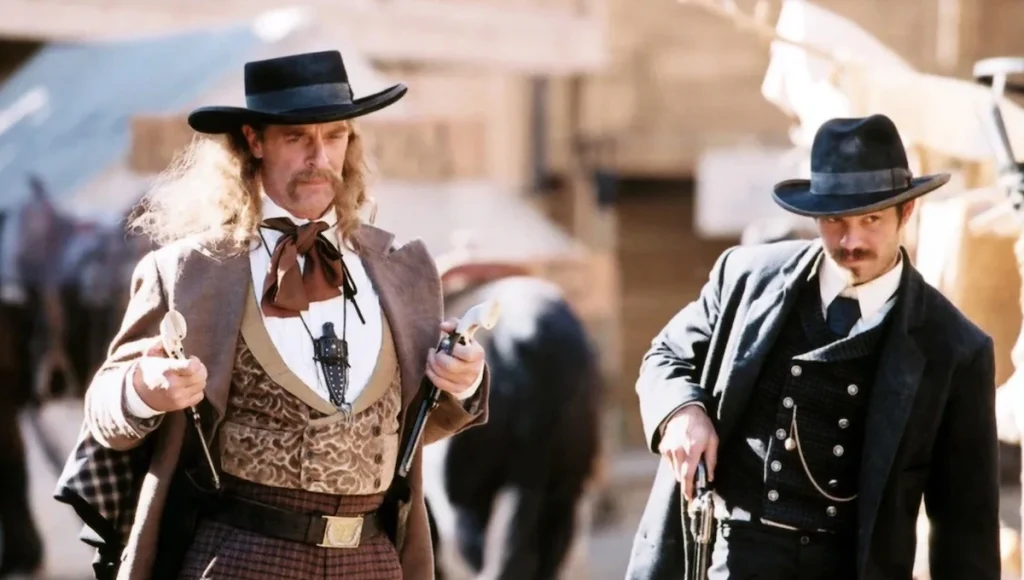
Wild Bill Hickok was playing poker at Nuttal & Mann’s Saloon No. 10 in Deadwood on August 2nd, 1876 when Jack McCall walked up behind the infamous American folk hero and shot Hickok (above, played by Keith Carradine in Deadwood) in the back of the head. The legend of the ‘Dead Man’s Hand’ of aces and eights was born in that moment and has remained rooted in poker lore ever since.
Caught in the act by Hickok’s tablemates for a start, you might have thought McCall’s trial to be an open and shut case. Not in the Wild West. The next day, an improvised miners’ court head McCall claimed he was avenging his brother, who Hickok had supposedly killed. The jury acquitted him on that basis, despite McCall not having a brother.
As if to prove that you should always ‘get it quietly’, McCall’s loud bragging brought about a second arrest, as U.S. Marshals detained him despite the ‘double jeopardy’ rule that would usually prevent a prisoner being tried for the same crime twice. The federal court ruled against that law because Deadwood sat on Indian land and its makeshift mining court had no legal standing.
McCall was soon convicted at Yankton in December 1876 and was hanged on 1 March 1877. Four years later in 1881, McCall’s body had to be exhumed due to the cemetery he was buried in being moved. The noose was still around McCall’s neck.
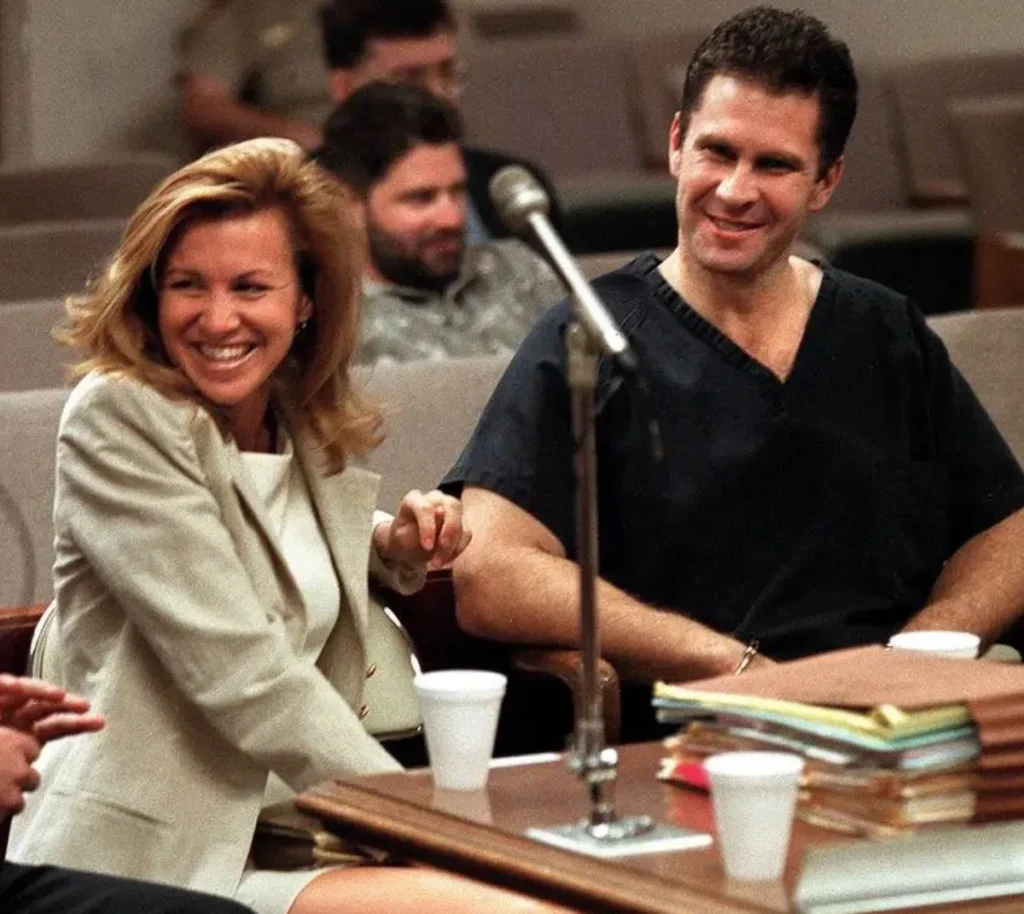
Ted Binion was a casino boss, heir to the Binion’s Horseshoe empire and the son of Benny Binion, who founded the World Series of Poker. Not for long, as he was found dead at his Las Vegas home in September 1998. His girlfriend Sandy Murphy, a former topless dancer, and her lover Rick Tabish, a Montana contractor (both above), were accused of murdering Binion for his fortune.
Prosecutors alleged that the casino owner had been drugged and suffocated, and that the pair then tried to dig up the silver that had apparently been buried by Binion in the Nevada desert. Murphy and Tabish were convicted in May 2000 and sentenced to life with the possibility of parole. In 2003, the Nevada Supreme Court overturned the murder convictions, partly because a statement from Binion’s former lawyer had tainted the original trial.
A retrial was soon scheduled for 2004, whereupon the defence argued that Binion, a known heroin user, had actually died of an overdose. The jury acquitted both Murphy and Tabish of his murder but convicted them of burglary and larceny over the silver. The case produced books, TV dramatizations and arguments that were never settled.
Binion died with millions of dollars’ worth of cash and treasure buried in and around his Las Vegas home, some of which was only accessible via a vault, the combination of which was only known by Binion himself and Rick Tabish. Much of the ‘Binion Hoard’ went missing after his death.
On 15 April 2011, federal prosecutors in Manhattan unsealed an indictment against the founders of PokerStars, Full Tilt Poker and Absolute Poker. Little did they know it then, but the face of poker was to change forever. The charges covered bank fraud, illegal gambling and money laundering, and the sites’ US domains were seized. Millions of American poker players woke up unable to access their money or play online.
It got worse for Full Tilt Poker specifically. Prosecutors alleged that it was operating a ‘Ponzi’ scheme, paying huge sums to its owners and board members while player funds had been spent and were inaccessible. That board included some of poker’s biggest names, and Full Tilt collapsed, bought out by PokerStars in July 2012 for $731 million, as the market leader at the time bought out Full Tilt’s assets and repayed players their funds.
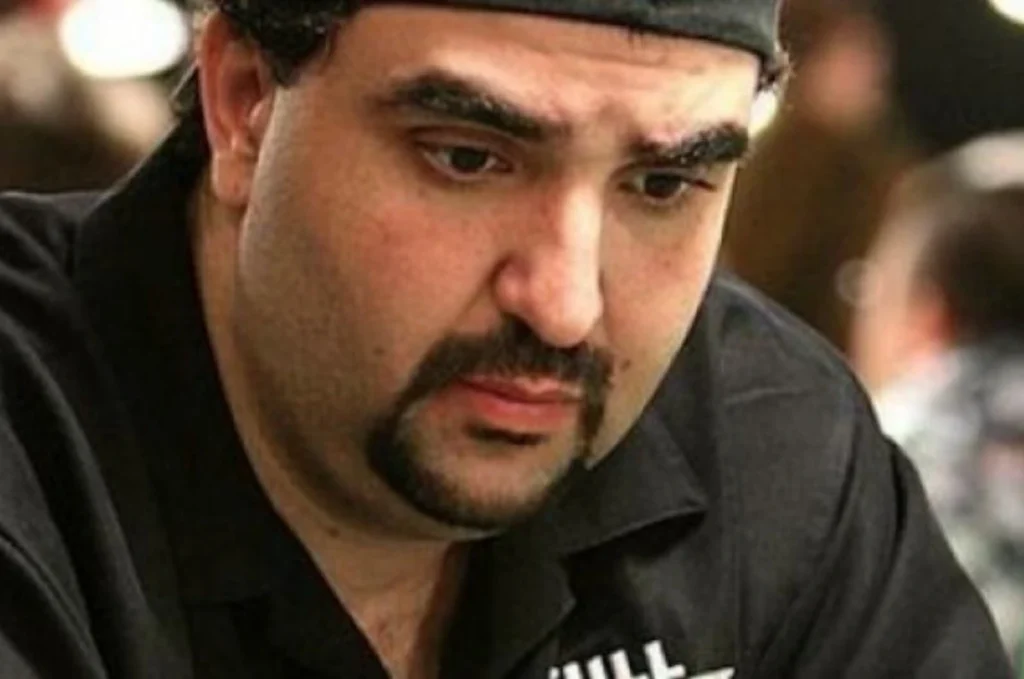
Most of the eleven defendants pleaded guilty, but none of the site principals served significant prison time, with Full Tilt CEO Ray Bitar (above) sentenced to time served. Black Friday effectively ended the U.S. online poker boom and reshaped the industry, with most American states still unable to play online poker to this day.
Phil Ivey is undoubtedly one of the greatest poker players ever, but this case concerned a casino game rather than poker. In August 2012, Ivey headed out for a night out at the exclusive members casino Crockfords in London with partner Cheung Yin Sun. Playing Punto Banco, Ivey (below) and friend walked away with around £7.7 million.
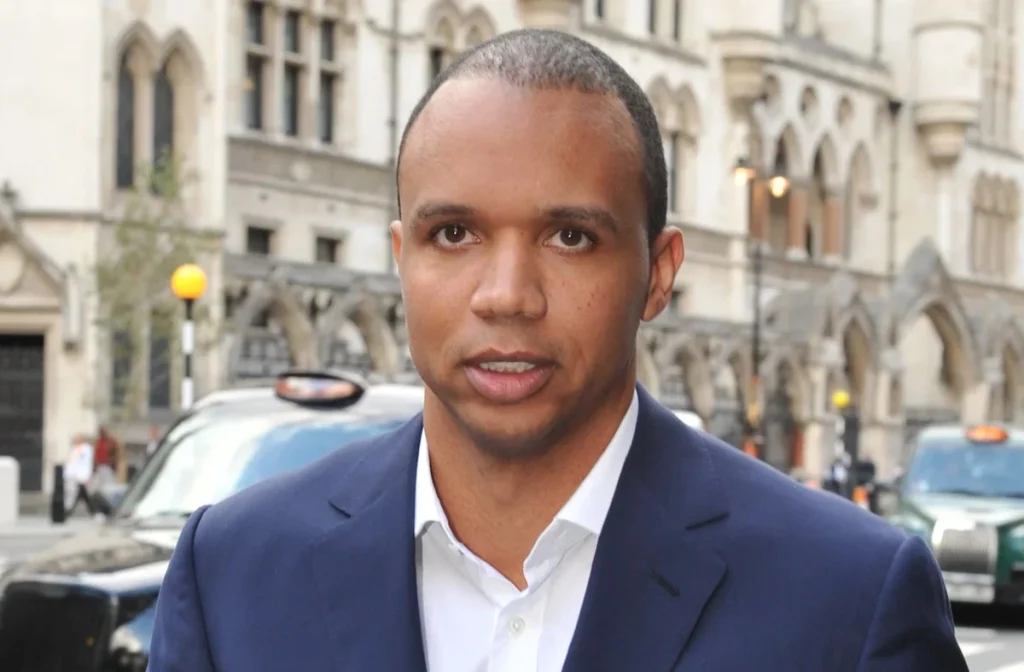
The next day, how they did so was revealed, as CCTV footage revealed that they had used edge-sorting, which exploits tiny asymmetric patterns on the backs of cards to tell them apart. Ivey persuaded the dealer to rotate certain cards, and he asked for a particular brand of cards that he knew could be visually identified by him and his keen-eyed associate.
Crockfords refused to pay out the money and Ivey sued. The 11-time WSOP bracelet winner lost the case in the High Court, repeated that loss in the Court of Appeal and in October 2017 lost at the Supreme Court too, with all five justices unanimously ruling that edge-sorting amounted to cheating. Ivey, meanwhile, insisted he had never cheated.
Back in the U.S., Ivey was ordered to pay close to $10 million to the Borgata in Atlantic City over similar edge-sorting techniques being employed. In the landmark case not only for poker but English law, the Ivey trial fundamentally changed how the test for dishonesty works in criminal cases.
Taking place both before and after COVID, Mike Postle’s dramatic case skirted around the U.S. courts as a live-streamed poker cash game cause uproar in the poker industry. Playing at Stones Gambling Hall in Sacramento between July 2018 and September 2019, Postle was accused of checking a device in his lap to monitor live footage of the hole cards while an accomplice relayed information to him via a headset hidden in his baseball cap (below).
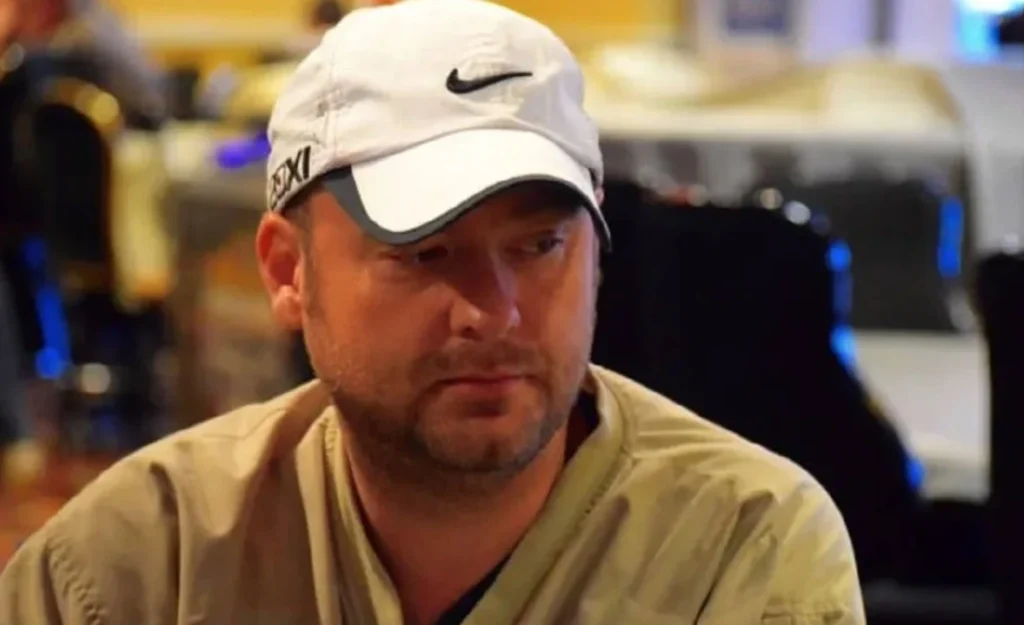
The whistleblower was a former commentator at Stones, Veronica Brill, who raised her suspicions in 2019, and sent a thousand internet sleuths into raptures on YouTube. Threatening to sue anyone who called him a cheat, Postle virtually disappeared from the felt after getting away with around $250,000 in other people’s hard-earned money.
As commentators such as Joey Ingram and Doug Polk investigated and dug through hours of livestreamed footage, every hand Postle played was picked apart like a Turkey carcass on Christmas Day. A $30 million class action followed against Postle, Stones and tournament director Justin Kuraitis, who was alleged to be the accomplice in question.
In 2020, a federal judge dismissed the claims against Postle and Stones, ruling that poker losses weren’t recoverable in that way. Most plaintiffs then settled with Stones and Kuraitis independently, while Postle resurfaced a couple of times under a false name in a bid to play again at the live felt, being rumbled when he once made a final table only to find he couldn’t cash out his winnings. Postle has hardly been seen since, and while he threatened to sue dozens people for defamation, including Brill and Daniel Negreanu, seeking $330 million, Postle dropped the suit in April 2021. Veronica Brill was awarded legal fees under California’s anti-SLAPP law.
Poker’s complicated legal history shows just how the game’s rich history and ever developing boundaries are constantly being pushed by smart people, sometimes with morals looser than a 3x call with seven-deuce offsuit. What counts as cheating, who owns the risk when money is held on a site, and whether a casino game should be treated like a skill game are questions that courts have answered very differently across the centuries and will likely continue to debate into the next era.
Poker has always had an oddly magnetic relationship with the law. Over the years, the game has flouted rules, flirted


Key Details Nebraska voters rejected two proposals to legalize online sports betting in the November 3 election. Initiative Measures 440

Key Details Oklahoma’s ban on sweepstakes casinos took effect on November 1, 2026, under SB 1589, according to Sweepsy’s state



Comments