
• Blogs
  • News
legal-united-states-poker-sites
  • Online Poker
    • Real Money Online Poker
    • Mobile Poker Sites
    • Poker Bonuses
      • No deposit
      • Rakeback
      • Reload
      • Loyalty Progams
      • Wagering Requirements
    • Networks
      • Chico
      • Horizon
      • Merge
      • Revolution
      • WPN
  • Reviews
    • Americas Cardroom
    • Betonline
    • Black Chip Poker
    • Bovada
    • Ignition
    • Sportsbetting Poker
  • Banking
    • Apple Pay
    • Bank Transfer
    • Bitcoin
    • Cash App
    • Crypto Currencies
    • Mastercard
    • Paypal
    • Prepaid Visa
    • Visa
    • Withdrawal Limits
    • Withdrawal Speed
  • By State
    • Alabama
    • Alaska
    • Arizona
    • Arkansas
    • California
    • Colorado
    • Connecticut
    • Delaware
    • Florida
    • Georgia
    • Indiana
    • Idaho
    • Illinois
    • Iowa
    • Kansas
    • Kentucky
    • Louisiana
    • Maine
    • Massachusetts
    • Maryland
    • Michigan
    • Minnesota
    • Mississippi
    • Missouri
    • Montana
    • Nebraska
    • Nevada
    • New Hampshire
    • New Jersey
    • New Mexico
    • New York
    • North Carolina
    • North Dakota
    • Ohio
    • Oklahoma
    • Oregon
    • Pennsylvania
    • Rhode Island
    • South Carolina
    • South Dakota
    • Tennessee
    • Texas
    • Utah
    • Vermont
    • Virginia
    • Washington
    • West Virginia
    • Wisconsin
    • Wyoming
  • WSOP
    • Event Guide
    • Main Event
    • Odds
    • Past Winners
    • Rules
    • Satellite
    • Schedule
    • Top Women Players
    • Where to Watch
  • Games
    • How to Play
      • 3 Card Poker
      • 5 Card Draw
      • 5 Card Stud
      • 7 Card Stud
      • Badugi
      • Caribbean Stud
      • Horse Poker
      • Mississippi Stud
      • Omaha Hi Lo
      • Omaha
      • Razz Poker
      • Stud
      • Texas Hold'em
      • Video Poker
    • Where to Play
      • 3 Card Poker
      • 7 Card Stud
      • Omaha Hi Lo
      • Omaha
      • Texas Holdem
      • Video Poker
  • Strategy
    • 3 Bet
    • Bankroll Management
    • Betting Rules
    • Bluffing
    • Check Raising
    • Continuation Betting
    • Folding
    • Hand Rankings
    • Heads Up
    • Poker Positions
    • Positional Betting
    • Pot Control
    • Semi Bluffing
    • Spotting Bluffing
    • The Flop
    • Tight Aggressive
  • Tournaments
    • Freeroll
    • Multi Table
    • Progressive Knockout
    • Satellites
    • Sit and Go
    • Tournament Bonuses
    • Turbo
Flag Background
Home › Poker Strategy › How to Adjust to Loose Tables

How to Adjust to Loose Poker Tables

how to adjust to loose poker tables

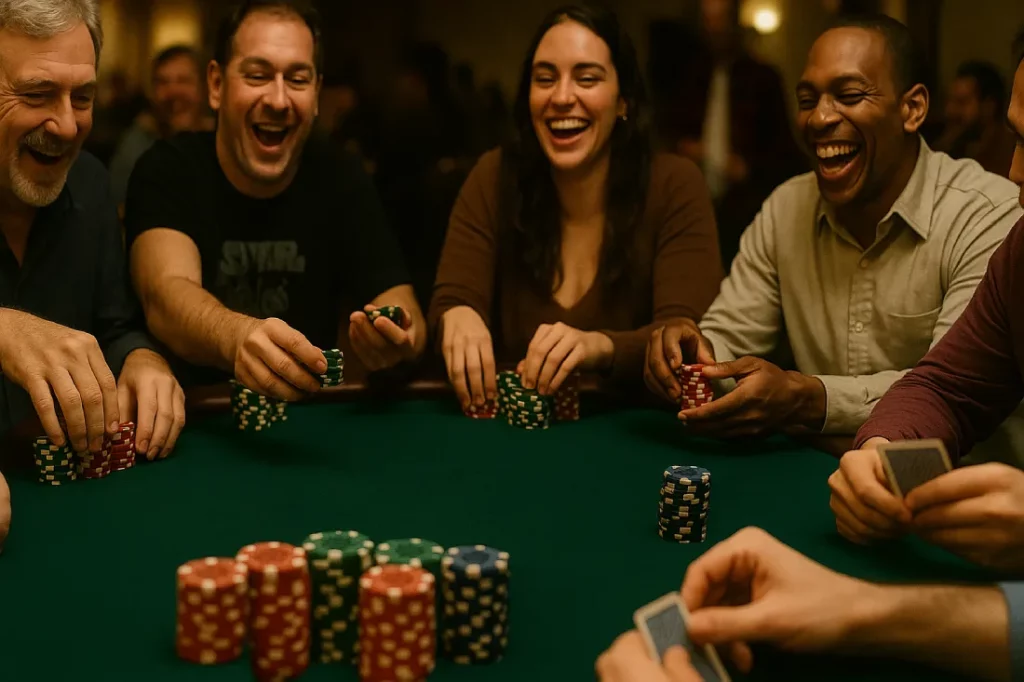
Loose tables in online poker are some of the most profitable opportunities available to skilled players. These action-heavy environments, where multiple opponents frequently see flops with weak holdings, create perfect conditions for getting significant winnings.

Discover dome of the tactics needed to profit from these games and how to adjust your pre-flop strategy. We’ll cover how to master post-flop play while managing the increased variance that comes with loose table dynamics.

Identifying and Selecting Profitable Loose Tables

A loose table is typically defined by a high “Voluntarily Put Money In Pot” (VPIP) percentage, indicating that players are frequently entering pots with a wide range of hands. These tables are full of players who are often too eager to see the flop, giving plenty of opportunities for skilled players to exploit their loose play.

Table Selection Criteria

A Heads-Up Display (HUD) is key for identifying profitable tables, because data is your primary tool for finding them. Use the metrics below and the suggested thresholds to scan the field and find suitable targets.

IndicatorTarget RangeAction Items
VPIP> 30%Look for tables with high VPIP for more loose players.
Players/Flop> 35%Target tables where many players see the flop.
Average Pot SizeAbove table averageIndicates active betting and potential for big wins.
Hands/Hour> 70Faster games mean more opportunities to exploit.
Aggression FactorLow-to-medium (< 2.0)Passive tables can be easier to dominate.

Pre-flop Strategy Adjustments

Adapting your pre-flop strategy is key when facing loose tables. This involves adjusting your starting-hand selection and 3-betting strategy to exploit opponents’ tendencies. To develop a comprehensive understanding of these concepts, you should master pre-flop strategies that work specifically against loose opponents.

Tight Aggressive Play Vs. Loose Play

Your pre-flop strategy should adapt significantly based on table dynamics. Learning how to identify tight-aggressive poker players from loose players will help you gain value and minimize losses.

AspectTight-Aggressive TableLoose Table
Starting Hand RangeTighten your range—only play premium hands (TT+, AK, AQ).Widen your range to include more suited connectors and mid pairs (77+, suited aces).
Raise SizingStandard 2.5-3x big blind opens.Increase to 4-5x big blind to thin the field and build pots with strong hands.
Position ImportanceCritical—wait for late position to play marginal hands.More flexibility, but position still matters for post-flop playability.
3-Bet Strategy3-bet value hands aggressively; reduce bluffs as opponents fold more.3-bet wider for value since opponents call light; avoid bluff 3-bets.
LimpingNever limp—always raise or fold.Can occasionally over-limp with speculative hands if multiple players are in.
Expected OutcomesSmaller pots, fewer opponents per flop, more fold equity.Larger pots, more multi-way action, less fold equity but better implied odds.

Post-flop Adaptations

Post-flop play on loose tables requires tactical adjustments to handle multi-way pots and adjust bet sizing effectively. When facing multiple opponents after the flop, it’s important to learn post-flop techniques that improve your edge in these complex situations.

Multi-way Pot Strategy

Loose tables often lead to multi-way pots. Here are important adjustments to consider:

  1. Play Strong Hands Aggressively: Get the most value from top pairs and strong draws.
  2. Exercise Caution with Marginal Hands: Avoid over-committing with weak top pairs.
  3. Focus on Position: Use your position to control the pot size and gather information.
  4. Use Pot Odds: Calculate pot odds carefully to decide on drawing hands.
  5. Bluff Sparingly: Loose players are more likely to call, reducing bluff effectiveness.
  6. Adapt to Opponent Tendencies: Observe betting patterns to exploit weaknesses.

Bet-Sizing Adjustments

You should adjust your bet sizing to reflect the table dynamics. Here’s how you can refine your approach:

SituationStandard SizingLoose Table SizingAction
C-betting50–70% pot40–50% potEncourage calls from weaker hands and control pot.
Value Betting70–100% pot60–80% potExtract value while keeping opponents in the hand.
Bluffing50–70% pot40–60% potReduce risk against calling stations.
Raising for Value3×–4× opponent bet2.5×–3.5× opponent betBuild pot with strong hands without scaring off action.
Defending Blinds3× raise size2.5× raise sizeProtect your stack while maintaining pot odds.

Recognizing Table Deterioration

Monitor for signs that table conditions have turned unfavorable. When two or more loose players leave and are replaced by tight regulars, or when table VPIP drops below 25% for extended periods, profitability declines sharply. Similarly, when average pot sizes fall significantly or table aggression factor rises above 3.0 consistently, it’s time to find a better game. Always leave when variance affects your emotional control, regardless of table conditions.

Advanced Concepts for Loose Table Mastery

Once you’ve mastered the fundamentals, these advanced concepts will help you gain an edge against loose opponents.

Player Archetypes You Can Exploit

To complement your loose table strategy, you should also learn techniques for spotting fish to quickly identify the most profitable opponents at any given table. Below are a couple of player archetypes you can increase your awareness of and exploit.

  • The Calling Station: This player calls frequently but rarely raises or folds, making them predictable and vulnerable to value betting. Against them, avoid bluffing entirely and use larger bet sizes (70-80% pot) to extract maximum value from your strong hands.

  • The Loose-Aggressive Maniac: This opponent raises and bets frequently with weak holdings, creating volatile pots through excessive aggression. Let them do the betting and call down lighter with medium-strength hands, while trying to maintain position to better control the action.

  • The Fish on Tilt: This player is making emotional decisions after suffering bad beats, leading to erratic and unprofitable play. Isolate them in heads-up pots with strong hands and avoid fancy plays, striking when their emotional state is most compromised to maximize your profit.

Table Image Management

Your image significantly affects how loose players respond to your actions. A tight image makes loose players more likely to pay off your value bets, so avoid showing bluffs or marginal hands to maintain credibility. When opponents begin respecting your raises too much, adjust by occasionally using your tight image to steal pots and keep them guessing.

Master Loose Tables with Confidence

Proper table selection is the foundation of success, allowing you to exploit opponents’ tendencies effectively. As you refine your pre-flop and post-flop strategies, you’ll find yourself better equipped to handle the dynamic nature of loose tables. Start by applying these concepts by joining freeroll tournaments, and watch your poker skills and winnings grow.

Cliff Spiller

Cliff Spiller

Author
View All Posts By Cliff Spiller

Cliff Spiller is a casino and sports enthusiast with nineteen-plus years of experience as a writer and editor. He’s blogged about US casino and sports betting news for several prominent gaming sites. Along the way, he’s written for OddsShark, NJ.com, SportingNews.com, and LegalSportsReport. Cliff is a US editor for ClickOut Media and a writer for Catena Media.

More Poker Resources

A Person making a continuation bet at a poker table
James Guill

Continuation Betting (C-Bets)

Continuation bets in poker are simple but powerful moves that allow you to control the action and apply pressure on


A person shrouded in shadow playing poker at a table with two other people and check raising, putting chips into a pot
James Guill

Check-Raising

A check-raise in poker is a strategic move where a player first checks, allowing an opponent to bet, and then

pocket aces leaning on poker chips on a poker table
James Guill

Poker Strategy

Whether you’re a beginner looking to understand the basics or an experienced player aiming to refine your skills, this guide


Placeholder Image Sign Up
Lucas Jumalon celebrates after winning the 2026 WSOP Main Event, posing behind stacks of prize money while holding the championship bracelet.

Lucas Jumalon Wins the 2026 WSOP Main Event After Incredible Comeback

Magnifying glass over poker chips and a laptop displaying an online poker table, representing an investigation into offshore poker platforms and player trust.

Poker Room Review’s CoinPoker Investigation Explained

Stopwatch on poker chips and cash illustrating action clock strategy in tournament poker.

Action Clock Poker: Will It Actually Slow the Game Down?

See All
Three players walk in front of a WSOP sign carrying poker chips

WSOP Day 50 Crowns Three Champions as Series Approaches Its End

poker table with poker chips stacked

Eastern Poker Tour Sets July 11 Date for WSOP League Rankings Final

poker table with poker chips stacked

Justin Smith Wins WSOP Colossus Title and $550,000 Prize

See All
Legal US poker sites logo
Browse Our Site
  • Poker Reviews
    • Ignition Review
    • Bovada Review
    • BetOnline Review
    • Americas Cardroom Review
  • State Laws
    • Texas
    • Florida
    • California
    • Virginia
    • Washington
    • Ohio
  • Georgia
  • Illinois
  • Colorado
  • New York
  • Arizona
  • Massachusetts
  • Wisconsin
  • Contact Us
  • Responsible Gambling
  • About Us
  • Sitemap
  • Privacy Policy
  • Authors
  • Blogs
  • News
You Are In Safe Hands
Our Recommended Poker Sites Have Been Verified by
18+ BeGambleAware MGA
Follow us:

All Rights Reserved. Trust in Your Bets, Gamble Responsibly.
For Visitors 18 Years and Older.

Level 27, Wing On Centre, 111 Connaught Road Central
Sheung Wan, Hong Kong
Tel:+1 (419) 601-6487