


Poker Bonus Red Flags
When you talk poker bonuses with other players, the conversation often turns to poker bonus warning signs and those enticing


How to Spot Fake Reviews and Their Red Flags
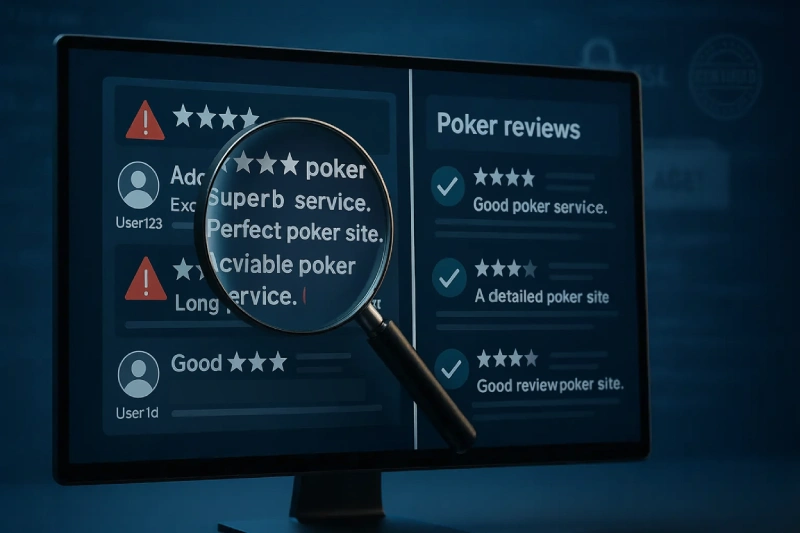
When researching online poker sites, learning to identify fake poker reviews can save you from costly mistakes and security risks. These fabricated testimonials deliberately mislead players into trusting unreliable platforms, often resulting in rigged games, withdrawal issues, or compromised personal information. Discover the specific warning signs you need to identify genuine player feedback apart from manufactured content designed to exploit your trust.
Recognizing language patterns in fake reviews helps you separate genuine feedback from fraudulent content. Before trusting any poker site, explore poker site reviews from multiple trusted sources to get a complete picture of each platform's legitimacy.
Fake reviews overflow with superlatives but lack concrete details. Phrases like "absolutely perfect" or "best site ever" should raise immediate red flags, since genuine reviews acknowledge both strengths and weaknesses with specific examples.
Suspicious profiles share common traits: generic usernames like "User123," no review history beyond recent poker site posts, and account creation dates within days of the review. Genuine reviewers have diverse review histories spanning months or years across different products and services.
Review farms copy-paste content across multiple accounts. Watch for identical sentence structures and phrases appearing in different reviews, like "fast payouts every time" or "unbeatable odds." This repetition reveals template use rather than authentic user experiences.
Technical indicators often reveal fraudulent poker sites before you deposit money. These signs are just as important as reading reviews themselves.
Check the site's claimed gambling license and verify details through official regulatory databases. Fake credentials show inconsistencies when you cross-reference license numbers, company names, and validity dates.
| Regulator Name | Jurisdiction | Verification Website | Key Information to Check |
|---|---|---|---|
| MGA | Malta | mga.org.mt | License number, validity |
| UKGC | UK | gamblingcommission.gov.uk | Licensee name, status |
| Curacao | Curaçao | curacao-egaming.com | License type, holder |
Legitimate sites provide transparent information about payment processes, withdrawal timelines, and any verification requirements. Red flags include unexpected delays, hidden fees, and excessive documentation requests after you try to withdraw. Verify SSL certificates and secure payment badges before entering any financial information.
Check the site's SSL certificate, domain age, and overall security infrastructure. Older domains (3+ years) with consistent ownership records are more reliable than newly created sites. Use domain lookup tools to verify registration dates and ownership information.
Affiliate marketing plays an important role in the online poker ecosystem. Quality affiliate sites provide valuable services by thoroughly vetting and reviewing poker sites, creating comprehensive guides, and offering expert analysis that would otherwise be difficult for individual players to access.
Established affiliates invest significant resources in evaluating poker sites because their reputation depends on recommending trustworthy platforms. So you can use them to learn about how sites work without spending your own resources.
While affiliate relationships inherently involve some bias, transparent affiliates clearly disclose their partnerships and provide balanced assessments. The best approach is to read reviews from multiple affiliate sources alongside community forums to get a complete picture of any poker site's legitimacy and quality. Warning signs of problematic affiliate marketing include:
Poker communities provide authentic feedback and work as early warning systems for scams. These grassroots networks share real experiences that manufactured reviews can't replicate.
Visit Reddit's r/poker and Two Plus Two forums for unfiltered opinions from actual players. These communities quickly expose scam sites and fake review operations. Search for the site name in these forums before depositing money.
Join trusted Facebook poker groups and follow reputable poker players on Twitter for real-time scam alerts. These networks share warnings about suspicious sites, sudden operational changes, and withdrawal problems as they happen.
Major poker scandals reveal patterns that still appear in modern fake reviews and site operations. Learning these historical events helps you recognize current red flags. Players who want to avoid such situations should focus on legitimate poker sites with proven track records and proper regulatory oversight.
Past scandals like Ultimate Bet's superuser cheating and Full Tilt's payment processing collapse showed warning signs that appeared in player discussions before the full scope became public. Sudden changes in site ownership, payment delays blamed on "technical issues," and defensive responses to legitimate criticism all preceded these major failures. These same patterns appear in today's fraudulent operations.
Genuine player experiences reveal inconsistencies that manufactured reviews carefully avoid. Real feedback includes specific details about actual gameplay, customer service interactions, and technical problems.
Real players mention specific issues with detailed context. They'll say "withdrawal took 8 business days despite 3-5 day promise" rather than vague complaints like "had a small issue but support fixed it immediately." Similarly, genuine praise acknowledges trade-offs, like "good game variety but mobile app crashes occasionally," while fake reviews claim perfection across all features.
Watch how sites respond to negative reviews. Legitimate operators acknowledge specific issues, offer contact information, and provide solutions. Sites using fake review campaigns either ignore genuine complaints while responding enthusiastically to obviously fake positive reviews or post defensive, generic responses that don't address the actual problem.
Real poker sites maintain similar reputations across platforms. Sites using fake reviews show dramatic rating differences, with suspiciously high scores on obscure review sites but poor ratings on Trustpilot, Reddit communities, specialized poker forums, and app stores where reviews are harder to manipulate.
Find reliable sources for poker site information by engaging with industry experts, active community members, and official gambling commissions. Build a list of trustworthy reviewers and forums that have proven accurate over time through consistent, detailed feedback.
Professional fake review operations vary their language, but subtle indicators remain. Emotional mismatches (positive language describing mediocre features), incorrect poker terminology, and unnatural mixing of different English dialects all suggest template modifications rather than authentic experiences.
Additionally, legitimate reviews appear randomly over time, while fake campaigns show suspicious clustering around site launches or promotional periods. Watch for burst patterns where dozens of reviews appear within hours or days, especially from new accounts.
Geographic review patterns provide valuable clues. Legitimate international poker sites show reviews from diverse locations matching their actual player base. Red flags include concentrated geographic clusters from unlikely locations, identical phrases from reviewers claiming different nationalities, and review posting times that don't match claimed time zones.
Pro Tip: Use multiple verification methods at once. Single indicators might mislead, but patterns across multiple detection techniques reveal systematic manipulation.
Where online poker is legal varies by state and country, making it your responsibility to verify you're playing legally. Choosing a properly licensed site protects you legally and financially, since unlicensed operators may not be held accountable for fraud or withholding winnings. Before signing up for any poker site, research your local gambling laws and confirm the operator holds valid licenses for your jurisdiction.
Spotting fake reviews requires multiple verification methods working together. Apply language analysis, technical checks, and community feedback to confidently identify manufactured content. Legitimate poker platforms welcome scrutiny and provide transparent licensing, operations, and player experiences. Time invested in verification protects your bankroll and personal information from fraudulent operators who depend on deceptive reviews.
When you talk poker bonuses with other players, the conversation often turns to poker bonus warning signs and those enticing
The era of bonus stacking in online poker has come to an end. What was once a viable strategy for

Ignition Poker bonuses give you better upfront value than its network partner, Bovada, with a $1,500 poker bonus versus $500,




Comments