


FanDuel Looks to Grow Online Poker Arm in the United States
The mushrooming sportsbetting brand FanDuel is emerging as a potential partner to PokerStars as online poker grows in both popularity



I've spent years watching talented players go broke making preventable mistakes that drained their bankrolls hand after hand, session after session. If you're transitioning from play-money games to real-money poker, or if you’re on the journey to becoming a winning player, you're likely making fundamental mistakes that are eating into your win rate.
In this guide, I'll explain the most expensive errors poker players make and give you actionable fixes that you can implement in your games.
Playing stakes that are too high for your bankroll is the single most destructive error a player can make. Even winning players experience 20-30 buy-in downswings due to variance, but when you're properly bankrolled, these downswings are survivable.
Let’s look at an example; you have $2,500 in your poker account and decide to play $2/$5 cash games with a $500 buy-in, giving you 5 buy-ins to play with. You're essentially one bad session away from busting your roll. Compare that to playing $0.10/$0.25 with $25 buy-ins; your $2,500 gives you 100 buy-ins, which is more than enough to weather the variance you’ll experience when playing.
Playing above your means also has a significant psychological effect, as you’ll be more likely to make defensive decisions that protect your bankroll rather than the optimal decision that maximise your win rate. When players go broke, they either quit poker entirely or make desperate plays trying to rebuild quickly, compounding their losses. They move up in stakes to "win it back faster," play hands they'd normally fold, and make emotional decisions that override their strategic knowledge.
In my opinion, this mistake makes all other strategic improvements irrelevant; you can study position, master starting hand selection, and control tilt perfectly, but if you go broke before these skills matter, none of it matters.
The standard bankroll rule is to never risk more than 1-5% of your total bankroll in a single session or tournament. This helps to protect you from variance while still allowing you to play meaningful stakes.
The bankroll recommendations change depending on the format you play; higher-variance games like MTTs require a larger bankroll than lower-variance games formats like cash games:
If you're a recreational player with a reliable income that you can use to reload your account, you can be more aggressive with your bankroll. However, I still recommend the conservative approach, especially when you're building your skills and bankroll simultaneously.
If you’re considering moving up in stakes, we recommend that you have at least 30+ buy-ins for your new stake level and have demonstrated a consistent win rate over 10,000+ hands at your current level. Showing a consistent win rate is important, as having the bankroll without the proven win rate means that you’re more likely to have to move back down.
If you have 25+ buy-ins for a higher stake, you can take a "shot" at that level for one session with a strict stop-loss to test the waters. If the session goes poorly, drop back down immediately and rebuild at your current stake level.
Knowing when to move down is equally important as knowing when to move up. To help protect your bankroll, we recommend moving down when your bankroll drops below 20 buy-ins for your current stake. A lot of players refuse to move down after moving up a stake level because of silly reasons like ego, but if you want to make it as a winning player, you need to know how to swallow your pride and protect your bankroll.
Playing too many starting hands creates difficult, post flop situations that chip away at your win rate. Your opening ranges should change depending on your pre flop position, playing tighter from early position and widening your range as you move around the table.
Your overall PFR stat should be around versus the optimal 18-25%, depending on how tight or loose you play. While you can get away with playing 40-50% of hands on the button, doing so from UTG will make you bleed chips in the long run. To give you a rough understanding of how many hands you should be playing, we’ve listed an average opening range for each position at a 9-handed table:
The majority of hands you’ll play should be in late positions like CO and BTN, as these positions are far more likely to give you postflop position than raising from UTG or MP.
Loose preflop play is a mistake that compounds through the hand; you enter pots with weaker hands than your opponents, so you’ll frequently face aggression while out of position, meaning that you have to overfold or lose money on later streets because you're playing marginal holdings.
If you’re not sure how to construct your ranges based on the percentages above, I’ve created a little cheat sheet that you can follow:
Early Position (UTG, UTG+1): Play only strong pairs (88+), and strong broadway hands like AK, and AQs. These hands perform well even when you're first to act postflop.
Middle Position: Add smaller picket pairs, more suited Broadways and suited Ax into your range; You have a slightly better position, so you can expand your range moderately.
Late Position (CO, BTN): Include suited connectors and 1-gappers, offsuit Broadway hands, and suited Kx hands, as your position allows you to play profitably with a wider range.
Blinds: Defend wider against steals from late position, but fold weak hands to early position raises. While you're getting a discount to see the flop you'll be out of position postflop.
These ranges are starting guidelines that should be adjusted based on your opponent’s tendencies and stack sizes, but they provide a solid foundation that prevents the most common preflop leaks.
"Any Ace" syndrome is the costly habit of playing any hand with an ace regardless of position or kicker strength, and is one of the most common leaks I see in real-money games.
Weak aces like A7o, A5o, and A3o are considered “trap hands,” as they're dominated by stronger aces; they make weak top pairs that lose big pots, and they rarely win enough to justify the times they get you in trouble. We recommend only playing suited Ax hands from early position, saving the weak offsuit Ax hands for when you’re raising from the BTN or SB. If you’re not convinced, review your last 100 hands and look at how many times weak ace hands lost you money – you should see a pattern of small wins and big losses
Tilt is an emotional state-of-mind that overrides strategic thinking, typically triggered by bad beats, coolers, or losing sessions. The most common tilt behaviors in real-money games include playing hands you'd normally fold, making hero calls without pot odds, and abandoning your stop-loss limits. One tilted session can erase weeks of disciplined profit, so it’s important to stay mindful of your mental state while you play.
Recognizing tilt early is a key skill that separates winning players from losing players. The moment you feel that familiar frustration building, acknowledge it, and take action, either by taking a breather to reset your state of mind, or by stopping your session early.
Implementing a maximum session length is the best way to make sure that you keep playing your A-game and avoid tilt. Poker is a complicated game that requires intense concentration, so it’s only natural that your mental state will start to slip the longer you play. We recommend taking a short break every hour or so to stretch your legs, take stock of your mental state, and refocus.
Setting a stop loss based on wins or losses is a trap that most players fall into, and will lead to sub-optimal decisions when at the tables. If you know that you’re approaching your loss limit, you’ll make decisions that protect your stack so you can keep playing. Similarly, if you know that you’re close to your win target, you may play too many hands to try and chase your goal.
The most important thing to consider is how you’re playing and feeling. If you feel good and you’re playing well, then keep at it – regardless of the result. If you feel like you want to stop, don’t force yourself to keep playing, even if you’ve just sat down at the table. Maximizing your playing time when you’re feeling good and minimizing it when you’re feeling bad will have a significant impact on your win rate.
Common triggers that cause tilt in players are usually negative, such as bad beats, coolers, aggressive opponents, and time pressure from other obligations. However, some players suffer from what’s called “winner’s tilt,” where the excitement of a winning session causes them to make significant mistakes.
Learn to recognize your personal warning signs for tilting, such as playing hands faster than normal, opening too many tables mid-session, moving up stakes, or feeling anger and frustration while you play. The best way to understand how tilt affects you is by keeping a tilt journal. After each session, note your emotional state, any triggers you encountered, and whether you maintained your discipline. Read through the journal every couple of weeks to look for patterns and create ways manage your emotions when they repeat themselves during gameplay.
I recommend using a "traffic light" self-assessment system:
Pre-session mental preparation creates accountability and makes it easier to take action when emotions run high.
A fundamental truth of poker is that a mediocre player at a soft table makes more money than a strong player at a tough table. Table selection is the highest ROI decision you make, yet many players refuse to do it.
Playing against recreational players instead of regulars can increase your win rate by 5-10 BB/100; that difference compounds dramatically over thousands of hands, potentially turning you from a losing/breakeven player into a winning player.
Online poker makes table selection easier than ever with lobby statistics that reveal table characteristics before you sit down. Spending 5-10 minutes to find a game with a high VPIP rate and average pot size will be much more profitable than immediately sitting at a random table.
When scanning the poker lobby, focus on these specific statistics:
Players Per Flop: Target tables showing 30%+ players seeing the flop, as this indicates loose, recreational players who are putting money in the pot with weak ranges, which is exactly what you want.
Average Pot Size: Look for 20+ big blinds or more. Larger pots suggest significant action and weak players who are building pots with marginal hands.
Hands Per Hour: Lower numbers may indicate inexperienced players taking time to make decisions, or a larger number of hands that make it to the river.
Beyond lobby stats, watch for these player-type indicators:
When choosing which table to join, useUse the "one fish rule";: a table with even one very weak player who sees 50%+ of flops is always worth joining. That player will likely be a big loser in the game, distribute chips to the table, and you want to be there to collect your share.
Expert Note: Note that fIn our experience, full-ring games (9-max) are typically softer than 6-max games, which usually attract more experienced players seeking action.
Knowing when to leave a table is as important as knowing which table to join. Look out ofr red flags which signal a decline in the game’s quality, such as:
If one or more of these situations occur, we recommend that you stop playing and/or find another table. Your goal is to maximize your hourly profit per hour, not to prove you can beat any table, so don’t be afraid to leave a bad table.
While many of the mistakes we’ve covered apply to both online poker and live poker, there are specific pitfalls that only affect online players.
Multi-tabling is appealing because it increases volume and rakeback, but it's often a poor decision for unprepared players. Playing multiple tables drastically reduces your decision quality, and poor decisions will cost you more money than the increased volume can generate.
We recommend only adding tables after demonstrating a good win rate over 10,000+ hands on a single table. This benchmark proves you've internalized fundamental decisions and can make them quickly and accurately, which will help you keep a good standard when multi-tabling.
Start by only adding one table, and only add more if you’re able to hold a strong win rate. In my experience, most players should cap themselves at four tables, as beyond that, the decision quality suffers significantly.
Warning signs you're playing too many tables include timing out on decisions, making default plays without thinking, missing opponent patterns, and feeling overwhelmed. If you can't explain your last three decisions on each table, you're likely playing too many.
The “rake” is the fee that poker sites take from each cash game pot or tournament entry; usually 2.5-5%. Cash games have a rake cap, which varies from 1-10bb, depending on your stake. This fee directly reduces your profit, as money is being taken off the tables. There are many players who are breakeven or a smaller loser that would be winning if it weren’t for the rake.
At microstakes, the rake can be as high as 15b//100 hands, meaning that you have to crush the games to be a winning player. A player who has a pre-rake win rate of 2 BB/100 would actually be a -13bb/100 loser after rake is accounted for.
Rakeback programs return 20-40% of your paid rake through loyalty programs, cashback, or direct rakeback deals. For a player generating $500 monthly in rake, 30% rakeback means an extra $150, and can be the difference between a winning or losing month.
When choosing where to play, we recommend that you compare the site’s rake structures and rakeback programs. Assuming that the game quality is the same, you could be a winning player on one poker site and a losing player on another, just because of the rake/rakeback programs. Ignoring rakeback is literally leaving money on the table that requires minimal effort to claim.
Make rakeback part of your site selection criteria, especially if you're a volume player grinding microstakes, where the impact of the rake is at its most severe.
HUDs (Heads-Up Displays) show opponent statistics and are a really useful tool for online players, but beginneHUDs (Heads-Up Displays) show opponent statistics and are a really useful tool for online players, but beginners often misinterpret data or rely on small sample sizes to make decisions. Making a strategy adjustment based on an opponent's stats over 20 hands will likely lead to mistakes, as the stats are meaningless of such a small sample.
To help you avoid making adjustments based on faulty data, use these minimum sample size guidelines:
Another mistake that players make is loading up their HUD with too many stats, making it hard to read in-game. Most stats are irrelevant to most of your decisions, so focus on these essential ones:
The convenience of oOnline poker's convenience creates the trap of playing while distracted, like watThe convenience of online poker convenience creates the trap of playing while distracted, like watching TV, browsing your phone, eating, or talking to others. Even small distractions can impact your win rate, as the lack of focus leads to missed information and “autopilot” decision making.
I recommend that you create a dedicated playing space free from distractions to maximize your focus. Use a comfortable seat and proper monitor positioning to reduce fatigue, eliminate TV, social media, and phone notifications during sessions, ensure adequate lighting, and minimize background noise.
Adopt a "professional session" mindset, and treat your poker sessions like work with clear start and end times. This mental framing helps you take the game seriously and make better decisions.
Before you start loading your tables, complete this pre-session preparation:
If you're playing recreationally, then a casual approach to gameplay is fine, but if you're serious about becoming a winning player, you must create a focused environment that supports quality decision-making.
To recap, the most common mistakes you can make as a real money poker player are:
Taking actions like adjusting your stake level to fit your bankroll, sharpening your preflop ranges, and finding the best tables can help increase your win rate without the need for significant studying. Most of the mistakes made by losing players are fundamental ones like these, so I recommend that you focus on plugging these leaks before working on deeper aspects of the game.
The mushrooming sportsbetting brand FanDuel is emerging as a potential partner to PokerStars as online poker grows in both popularity

The New Year began with a bang this week, as the latest Legal U.S. Poker Sites Freerollers Open finale ended
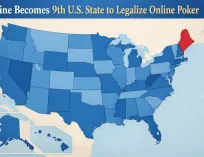
The great U.S. state of Maine has become the ninth state to legalize online poker, with the game expected to






Comments