


Sit and Go Tournaments
What is an SNG Tournament? In short, Sit and Gos offer tournament-style poker in a shorter, more flexible package. They're


6-Max vs 9-Max SNGs: Adapting Your SNG Strategy
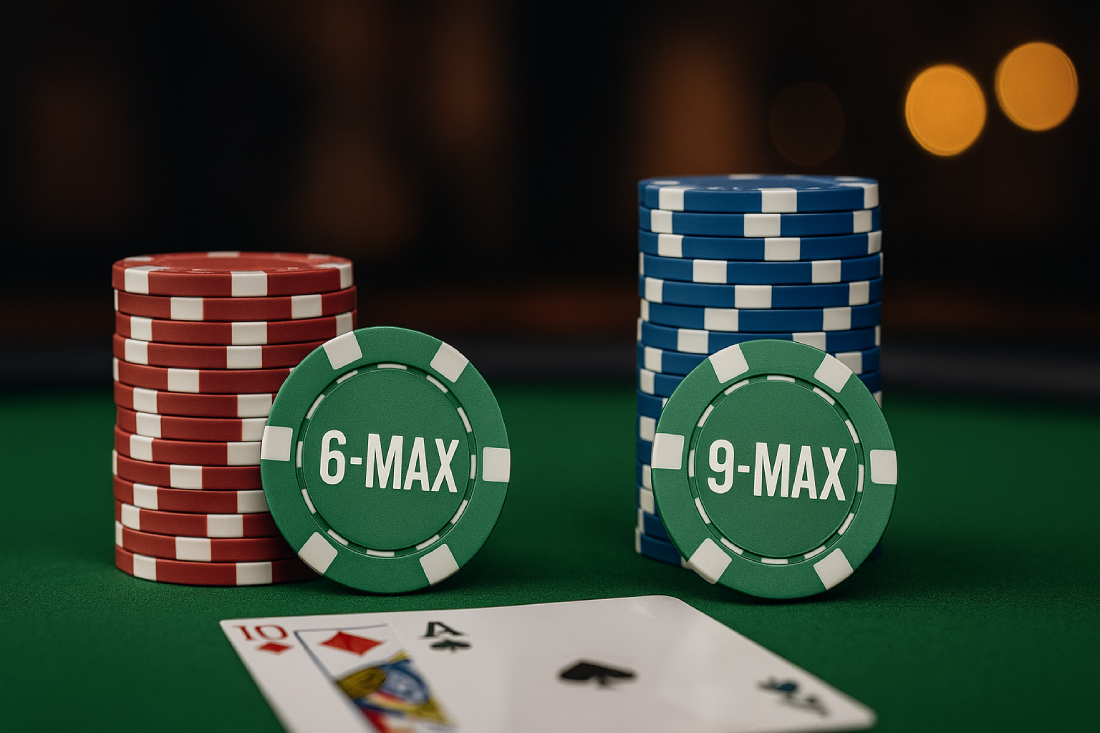
Choosing between 6-max vs. 9-max SNGs (Sit & Go) isn’t just about the number of seats. Each runs at its own pace, rewards different skill sets, and demands you adjust your ranges accordingly. Play them the same way, and you’ll bleed value fast. Below, we’ll unpack how these two SNG formats differ in speed, position play, ranges, and bankroll strategy, helping you find the Sit & Go strategy that fits your style or switch between them without punting EV.
The number of players at an SNG table directly affects game dynamics and strategic adjustments. Understanding SNG tournament structure starts with recognizing how table size shapes hand selection, position value, and aggression frequency. Here's a comparison of key features of 6-Max and 9-Max tables.
| Feature | 6-Max | 9-Max |
| Player Count | 6 players, more intimate setting | 9 players, larger group dynamics |
| Blind Structure | Faster escalation, encourages aggression | Slower escalation, allows for patience |
| Starting Stack | Typically similar, but game speed varies | Typically similar, but game speed varies |
| Average Game Duration | Shorter games, due to faster pace | Longer games, due to more players and slower pace |
| Typical Buy-In Ranges | Varies by site, no clear difference | Varies by site, no clear difference |
The tempo of 6-max and 9-max games shapes how you approach every hand. With fewer players, the action naturally moves faster in 6-max, while 9-max gives you more time to observe, plan, and wait for premium spots.
In 6-max, you’ll see more hands per hour, which means more decisions and more chances to be involved in pots. The downside is that you’ll have less time to think through each move, so quick, confident decision-making becomes important.
By contrast, 9-max games move at a slower pace. You can afford to be patient, fold more often, and take time to read opponents. The rhythm is steadier, favoring players who prefer structure over constant pressure.
The skills needed for 6-max vs 9-max SNGs differ, affecting your approach and learning path. Up next are the specific skill sets required for each format.
9-max SNGs are the classic setup, rewarding patience and structured poker play. They’re a good starting point for players learning core SNG strategy. It's best for players who prefer a measured and analytical approach and want to build a strong poker strategy foundation before transitioning to faster formats.
6-max SNGs are fast, aggressive, and packed with decisions, a format that demandsR a sharp 6-max poker strategy and quick adaptability.
Comparison Callout Box
| Skill Requirement | 6-Max Focus | 9-Max Focus |
| Aggression | High | Moderate |
| Patience | Moderate | High |
| Decision Speed | Fast | Moderate |
| Observation | Moderate | High |
Position is a critical factor in poker, and its importance varies between formats. Here's how to adjust your position play for each format.
| Position | 6-Max Strategy | 9-Max Strategy |
| Early Position | Tight, aggressive play | Very tight, conservative approach |
| Middle Position | More flexible, mix of aggression | Balanced, cautious play |
| Late Position | Highly aggressive, exploit opportunities | Aggressive, but with more caution |
| Small Blind | Defend often, leverage position | Defend selectively, focus on strong hands |
| Big Blind | Defend aggressively, wider range | Defend cautiously, tighter range |
| Button | Maximize aggression, control the table | Aggressive, but mindful of opponents |
Your starting hand selection should always adjust to the table size. In 6-max games, you can play broader ranges because the pace is faster and there are fewer opponents to act behind you. In contrast, 9-max rewards discipline and a tighter selection, since more players increase the odds of someone waking up with a strong hand. For example, suited connectors and speculative hands gain value in 6-max, letting you play creatively and apply pressure. In 9-max, premium pairs and high cards matter more, making patience and position your best allies.
Switching between 6-max and 9-max formats takes planning and patience. Here’s how to make the move smoothly. Transitioning takes time, but with focus and consistent effort, you’ll adapt confidently to both formats.
Understanding the differences between 6-max vs 9-max SNGs is key for any serious poker player aiming to master both SNG formats and refine their overall Sit & Go strategy. By tailoring your strategy to each format, you’ll sharpen your edge and boost long-term results. Dive in, test your limits, and see where your game thrives. If you’re ready to move beyond strategy and into real money play, check out our reviewed and vetted poker sites for trusted info and site selection.
What is an SNG Tournament? In short, Sit and Gos offer tournament-style poker in a shorter, more flexible package. They're

Types of Online Poker Tournaments Online poker tournaments come in a variety of different formats. Different tournament types have varying

Understanding Turbo Poker Tournaments In turbo tournaments, the clock controls everything. Each blind level lasts just long enough for a







Comments